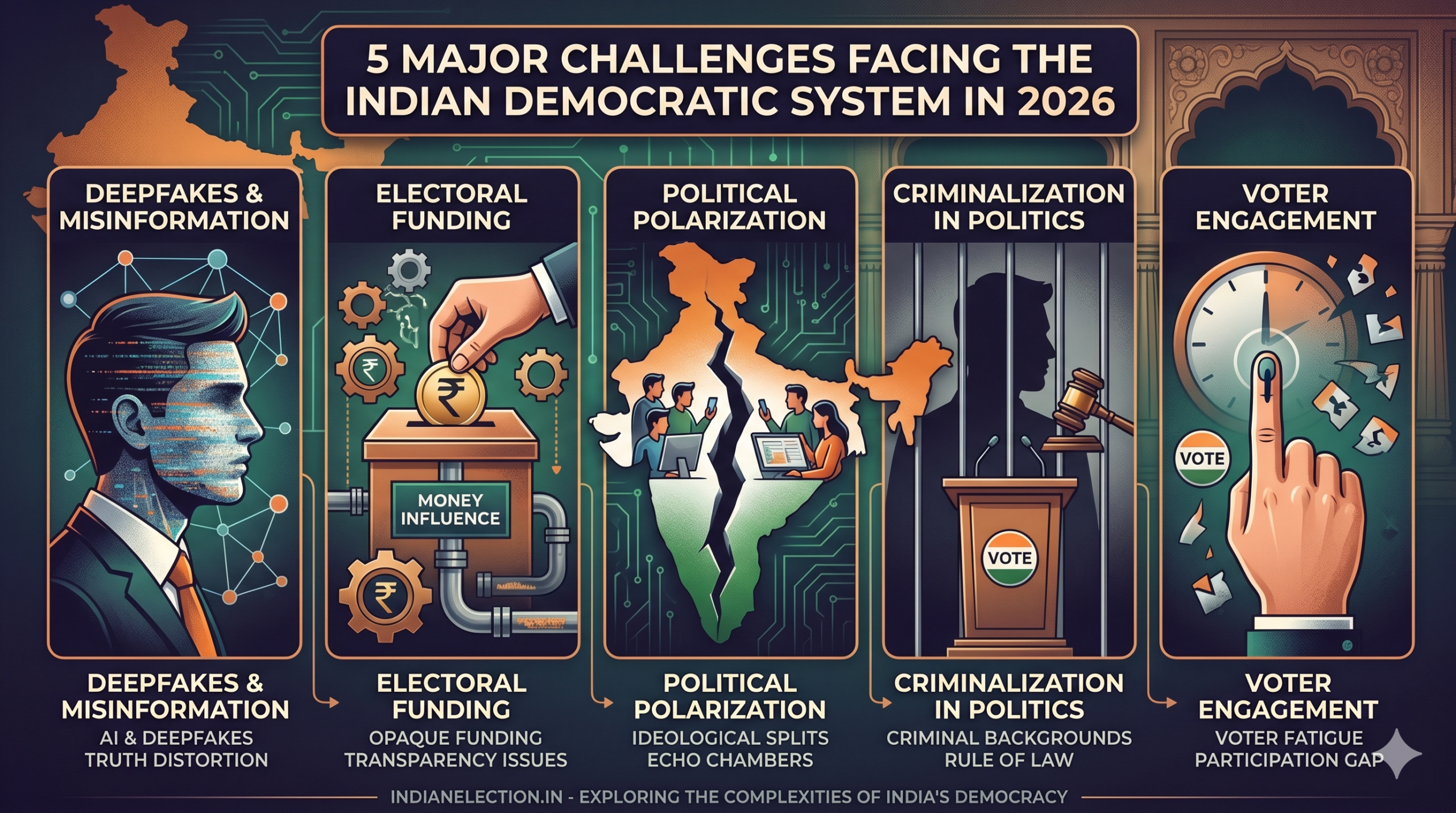
The Indian democratic system is often described as the world’s largest, a vibrant tapestry of diverse voices, regional aspirations, and evolving political consciousness. However, as we navigate 2026, the landscape is shifting. With the rapid integration of technology, changing socio-political dynamics, and the constant need for transparent governance, the system faces unique hurdles.
Understanding these challenges is essential for any citizen or global observer aiming to grasp the pulse of Indian politics today. Here are five of the most significant challenges currently testing the resilience of Indian democracy.
Read also : How to Check Name in Voter List Online (2026 Updated Guide)
The Rise of Deepfakes and Digital Misinformation (Indian Democratic System)
In 2026, the battle for public opinion has moved firmly into the digital realm. The rapid advancement of AI-generated content, specifically deepfakes, has created a “post-truth” environment. When voters cannot distinguish between a real candidate statement and a hyper-realistic AI fabrication, the core of informed decision-making is compromised. The challenge lies not just in regulating technology, but in fostering digital literacy among the vast Indian electorate.
Electoral Funding and Financial Transparency (Indian Democratic System)
The “money power” in elections remains a perennial concern. While India has introduced electoral bonds and various disclosure norms, the influence of corporate and unaccounted funding continues to spark debate. For a system meant to represent the common citizen, the disparity in financial resources between political parties can create an uneven playing field, potentially muting the voices of smaller, grassroots organizations.
Deepening Political Polarization and Echo Chambers (Indian Democratic System)
Social media algorithms are designed to keep us engaged, but they often do so by feeding us content that reinforces our existing biases. In 2026, this has led to increased political polarization. When public discourse moves from debating policy to attacking identities, the “middle ground”, essential for compromise in a democracy, begins to shrink. This makes it increasingly difficult for citizens to have constructive, fact-based conversations about the country’s direction.
The Persistent Issue of Criminalization in Politics (Indian Democratic System)
Despite numerous judicial interventions and calls for reform, the representation of individuals with criminal backgrounds in legislative bodies remains a stubborn challenge. When the institutions responsible for making the law are perceived to be compromised, public trust in the rule of law inevitably declines. Addressing this requires a combination of stricter enforcement and a shift in voter attitudes towards candidate selection.
Read also : How to Apply for New Voter ID Online in India (Step-by-Step Guide)
Voter Engagement and “Issue Fatigue” (Indian Democratic System)
With elections happening across various levels, Panchayat, State, and Parliamentary, at different times, Indian voters are arguably the most “election-tested” people in the world. However, this frequency can sometimes lead to voter fatigue. The challenge for 2026 is maintaining high voter turnout and informed engagement, ensuring that the electorate stays connected to the issues that impact their daily lives rather than succumbing to campaign exhaustion.
Frequently Asked Questions (FAQs)(Indian Democratic System)
Q: Is the Indian election system considered secure in 2026?
A: Yes, the Election Commission of India (ECI) continues to utilize Electronic Voting Machines (EVMs) coupled with Voter-Verified Paper Audit Trails (VVPATs), which allow voters to verify their vote, significantly enhancing transparency and trust in the system.
Q: Why is misinformation a big challenge for Indian democracy?
A: Because India has one of the world’s largest populations of internet users, the rapid spread of misinformation can sway public opinion, polarize communities, and create confusion regarding election dates, candidate platforms, and voting procedures.
Q: What is the biggest challenge facing Indian elections today?
A: While there are several, the dual challenge of balancing technological progress (AI, social media) with the need for transparent, fair, and unbiased campaigning is widely considered the most pressing issue for the democratic process in 2026.
Q: Can a common citizen help improve the democratic system?
A: Absolutely. Informed voting, active participation in local governance (such as Gram Sabhas), questioning political manifestos, and consuming news from diverse, verified sources are the most powerful tools a citizen has to keep the system accountable.